VPN Bans and Regulation: What the Law Actually Does
How laws restrict VPNs without always banning them outright: blocking obligations, app store pressure, licensing, and the gap between regulation and technical blocking.
Short answer#
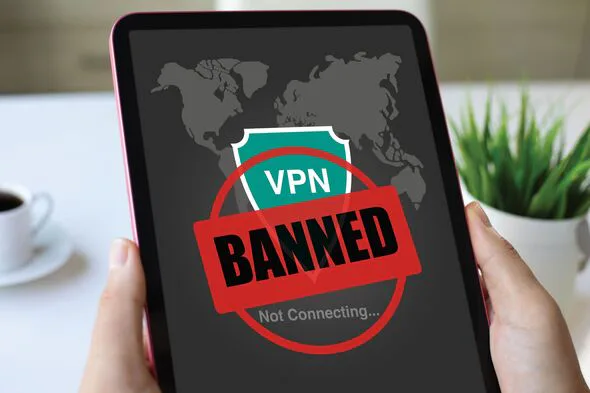
Most governments do not “ban VPNs” for every citizen in the sense of writing a law that says “using a VPN is a crime for everyone”. More often, they use regulation to make providing VPNs harder, force compliance with blacklists, pressure app stores to remove clients, or create legal risk for providers and users. The law creates pressure; the network does the blocking.
Bans vs regulation vs pressure#
These terms get conflated. The distinction matters because it determines where the failure happens:
| Approach | What it does | Where it hits |
|---|---|---|
| Provider blocking obligation | Requires VPN services to not provide access to blocked resources, or to block them themselves | Providers. If they don’t comply, their domains/IPs get added to the national blocklist. |
| Licensing/registration | Requires VPN providers to register, get approval, or only operate with permission | Providers. Unlicensed services become targets for blocking and legal action. |
| App store pressure | Asks or compels Apple/Google to remove VPN apps from local stores | Users. Even if a service still works, it becomes harder to download/update in-country. |
| Criminalization | Makes using or distributing circumvention tools a crime in specific cases | Users/providers. Often used selectively or as an aggravating factor, not necessarily as the sole tool. |
| Technical enforcement | Uses DPI, TSPU, IP/subnet blocks, protocol detection, or active probing | Everyone on the affected network. This is what actually stops connections. |
In practice, these stack. A law creates an obligation; non-compliant providers get blocked; app stores remove them; and ISPs use technical measures to catch what remains.
How the law becomes technical#
Laws rarely say “drop all WireGuard traffic”. They say “block access to banned resources” or “comply with the unified register of blocked sites”. The technical implementation follows:
- Obligations become blocklists. If a provider refuses to comply with demands to block certain sites or to restrict access, regulators can order ISPs to block the provider’s infrastructure. This is the mechanism used in Russia under its 2017 law.
- Inspection systems enforce at scale. Russia’s TSPU sits inside carrier networks and can apply blocks to addresses, subnets, and protocols. Iran uses gateway controls and whitelisting to restrict international access. China’s system combines legal requirements, carrier policy, and border filtering.
- Pressure moves upstream. Hosting providers, CDNs, and app stores are not neutral pipes. Legal pressure can result in suspended services, removed apps, or blocked payments even if the underlying protocol is sound.
This is why a VPN can work one week and fail the next: the legal pressure changes, and technical enforcement follows.
Case studies#
Russia#
Russia’s 2017 law requires VPN services to block access to resources on the state registry or face blocking. Since then, Roskomsvoboda has documented a shift from blocking specific services to blocking entire protocols and subnets. Enforcement waves have targeted both providers and, increasingly, the infrastructure that hosts them. App store removals and payment friction have also played a role. The result is not a total ban on VPN use, but sustained pressure that makes reliable access harder to maintain.
Iran#
Iran takes a different approach: tiered access. Approved users on “white SIMs” or Internet Pro can reach international gateways with less restriction, while the general population faces filtering and shutdowns. Proposed legislation has repeatedly sought to tighten control over gateways and require authentication. VPN use is not broadly criminalized in the current draft, but legal uncertainty remains and enforcement can be unpredictable. The key point: regulation enables whitelisting, which creates a two-tier system rather than just blocking tunnels.
China#
China does not have a blanket criminal ban on using a VPN as a private individual in most cases, but unapproved VPN services are blocked and providers face pressure. App stores have removed VPN apps at government request. Carriers conduct sweeps to block VPN traffic, and distribution is heavily constrained. The legal environment is opaque, but the effect is clear: obtaining and maintaining a working client is the hard part, and approved enterprise VPNs exist in parallel.
Turkey#
Turkey has a history of blocking orders against VPN services and periodic restrictions during periods of tension. Courts can order blocks, and providers are often caught between compliance demands and user access. This demonstrates how judicial orders can be used to restrict circumvention without a permanent, country-wide criminal ban on all VPN usage.
Consequences for users and providers#
| Actor | Potential consequences |
|---|---|
| Providers | Blocking, fines, license revocation, hosting suspension, payment processor pressure, and legal action. |
| Distributors | App store removal, takedowns, and pressure on mirrors/CDNs. |
| Users | In most documented cases, individual users are not the primary targets of mass prosecutions for using a VPN. However, this varies by jurisdiction, can change over time, and using a VPN can become an aggravating factor in other charges. Legal risk is real even when not widespread. |
Important: This article describes legal and technical trends, not legal advice. Laws change frequently and enforcement varies. If you need legal advice for a specific situation, consult a qualified lawyer in your jurisdiction.
What the law doesn’t do#
- It doesn’t make all VPNs undetectable. Regulation can make them unavailable even if the protocol is strong.
- It doesn’t require universal criminalization to be effective. Blocking obligations and app store pressure can be more effective than prosecuting millions of users.
- It doesn’t fix the technical problem. A law can force compliance, but DPI and active probing still exist. Conversely, strong protocols can’t overcome a complete shutdown or a total block of all possible exit paths.
- It doesn’t create a single global pattern. Approaches differ wildly. Some focus on providers, some on gateways, some on platforms.
Practical considerations#
- Know the mechanism. If a client disappears from the app store, that’s likely regulatory/app store pressure, not a technical bug. If all servers fail at once, it’s likely blocking or a sweep.
- Assume availability is fragile. Download and save configurations offline before you need them, especially when traveling to or through restrictive jurisdictions.
- Understand the split. The question isn’t “is VPN use banned?” but “is it easy or risky to provide, distribute, and maintain access right now?”
- Treat risk separately. Technical resistance and legal risk are different. Strong protocols help with detection, but they don’t remove legal exposure in places where use is restricted or risky.
- Stay informed. Follow reputable sources like Access Now, EFF, OONI, and local digital rights groups for changes in enforcement, not just laws on paper.
Atlas articles#
- Internet Censorship in Russia - How TSPU and enforcement waves work in practice
- Internet Censorship in Iran - Whitelisting, tiered access, and gateway control
- Internet Censorship in China - Carrier sweeps, app store pressure, and the Great Firewall
- What Makes a VPN Resistant to Censorship? - Protocols, addresses, and operations
- Why a VPN Can Work Today and Fail Tomorrow - How blocks evolve
- Commercial VPN vs Independent VPN - Tradeoffs in resilience and pressure
Sources
- Russia: New Law Gives Kremlin More Control Over Runet Human Rights Watch
- Russia: Crackdown on Bypassing Online Censorship Human Rights Watch
- VPNs in Russia: from blocking services to blocking protocols Roskomsvoboda
- #KeepItOn: fighting internet shutdowns around the world Access Now
- Iran: Internet Censorship and Surveillance Article 19
- China: Great Firewall and Digital Censorship Article 19
- VPN Blocking OONI
- Legal Protections for Encryption Electronic Frontier Foundation
Last reviewed October 31, 2026. Corrections and additions are welcome.