Internet Shutdowns and the Law
When governments order the internet off: legal justifications, international law, accountability, and why no VPN can restore a full shutdown.
Short answer#
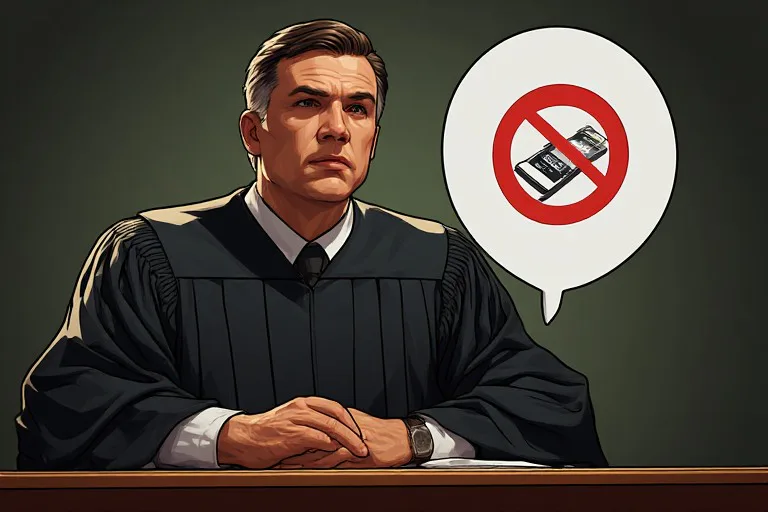
An internet shutdown is the removal of connectivity itself, not just the blocking of specific sites. Governments order them through legal or emergency powers, but under international human rights law blanket shutdowns are almost always disproportionate. During a full shutdown, no client-side VPN can restore international connectivity because the network paths have been withdrawn.
Shutdowns vs censorship vs throttling#
These are different tools with different legal and technical effects:
| Tool | Technical | Legal framing | Can a tunnel help? |
|---|---|---|---|
| Platform blocking | DNS/SNI/IP blocking of specific services | Often justified as platform regulation or “filtering” | Sometimes, if the block is selective and the tunnel endpoint is still reachable. |
| Censorship/filtering | DPI, protocol detection, address blocks | Often framed as content regulation or “cybersecurity” | Often, depending on the layer and protocol. |
| Throttling | Traffic shaping, latency, UDP restrictions | Less visible, rarely openly admitted | Sometimes, but throughput can remain unusable. |
| Shutdown | Routing changes, disconnection from upstream, mobile allowlists | Framed as emergency/public order/national security | No, for a full national shutdown. Domestic networks may remain up (like Iran’s NIN). |
Legal justifications#
Governments that order shutdowns almost always point to one of the following justifications:
- Public order - To prevent coordination during protests or unrest.
- National security / armed conflict - Often used during wars or periods of heightened tension.
- Elections - To limit coordination or the spread of information during voting periods.
- Communal violence / misinformation - To prevent incitement or the spread of unverified content.
The key question is not whether a government can declare a concern, but whether the response is necessary and proportionate. A blanket cutoff of an entire population is rarely proportionate to a specific threat.
International law: necessity and proportionality#
Several sources make this clear:
- ICCPR Article 19 - Protects freedom of expression and the right to seek, receive and impart information. Access to the internet is central to exercising this right in the modern era.
- The Siracusa Principles - Clarify that any limitation on rights must be prescribed by law, serve a legitimate purpose, be necessary, and be proportionate. Vague “national security” claims cannot justify indiscriminate measures.
- UN Special Rapporteurs on Freedom of Expression - Have repeatedly condemned blanket internet shutdowns as disproportionate and in violation of international human rights obligations. The Joint Declarations on freedom of expression have also warned against shutdowns.
- OHCHR statements - Have consistently raised concerns about shutdowns, noting their impact on emergency services, journalism, healthcare, and democratic processes.
In short: targeted measures may be considered in narrow circumstances, but blanket, nationwide shutdowns are almost never justifiable under these standards.
Examples from recent years#
| Context | What happened | Notes |
|---|---|---|
| Iran (2026) | Two prolonged shutdowns, the second lasting 88 days with near-total loss of international connectivity. Domestic NIN remained available. | Shows the “domestic network remains up” model. Restoration was partial and followed by throttling and tiered access. See Internet Censorship in Iran. |
| Myanmar | Repeated, prolonged shutdowns and targeted cuts during periods of unrest. | Demonstrates durability - shutdowns can persist for months. |
| Sudan | Frequent, short shutdowns timed to events, alongside longer disruptions. | Shows shutdowns can be used both as event-based cuts and as longer tools of control. |
| India | The highest volume of shutdowns globally by count for years, often ordered at the state level. | Shows how shutdowns can become a normalized, repeated tool even in democracies. |
Accountability and transparency#
Shutdowns suffer from a persistent accountability gap:
- Vague orders. Many are issued verbally or through opaque channels with no public justification.
- Lack of judicial oversight. Orders are often made by executive bodies with little or no prior review.
- No ex post review. Even when challenged, courts often rule after the shutdown has ended or refuse to hold those responsible accountable.
- Impunity. There are few documented cases where officials have been held accountable for an unlawful blanket shutdown.
- Data gaps. As noted in How Often Do Countries Shut Down the Internet?, tracking relies on observation and reporting, so the true number is almost certainly higher than documented.
Impact on users#
- Emergency services - Shutdowns cut access to medical information, hotlines, and coordination during crises.
- Journalism - Reporters cannot send footage or reports out, and citizens cannot document abuses.
- Economy - Businesses that rely on online payments, communication, or delivery suffer immediate losses.
- Education - Online classes become inaccessible.
- Circumvention fails - During a full shutdown, VPNs, proxies, and obfuscated protocols cannot create an international path. If only the domestic network remains (like Iran’s NIN), domestic services may work but global ones won’t. Starlink can be jammed, illegal, and risky to use.
- Chilling effect - Even short shutdowns create fear and disrupt coordination long after restoration.
Practical considerations#
- Plan ahead. If you’re in a region at risk of shutdowns, download maps, documents, and configurations offline. Agree on alternative communication plans in advance.
- Know the difference. Test whether domestic sites load while international ones don’t. If domestic sites work, the NIN or local network may be up even if the global internet is down.
- Expect restoration to be partial. As seen in Iran, access can return with throttling, filtering, and tiered access. Throughput may be poor even when connections are technically possible.
- No miracle tool. There is no client-side setting that restores a withdrawn international route. Focus on preparation, not last-minute downloads.
- Legal awareness. In some jurisdictions, using certain tools during a shutdown may carry additional risk. This page describes network and legal trends, not legal advice.
Atlas articles#
- How Often Do Countries Shut Down the Internet? - The data on frequency and trends
- What Is Internet Censorship? - How filtering differs from shutdowns
- Internet Censorship in Iran - A concrete example of prolonged shutdowns and restoration
- VPN Bans and Regulation: What the Law Actually Does - The legal pressure that often accompanies shutdowns
- Why a VPN Can Work Today and Fail Tomorrow - Why shutdowns break tunnels differently
Sources
- When repression meets resistance: internet shutdowns in 2025 Access Now
- Rising repression meets global resistance: Internet shutdowns in 2025 (full report, PDF) Access Now and the #KeepItOn coalition
- #KeepItOn: fighting internet shutdowns around the world Access Now
- NetBlocks NetBlocks
- Joint Declaration on Freedom of Expression and Responses to Conflict Situations OSCE/UN Special Rapporteurs on Freedom of Expression
- The Siracusa Principles on the Limitation and Derogation Provisions in the International Covenant on Civil and Political Rights International Commission of Jurists
- Internet Shutdowns UN Office of the High Commissioner for Human Rights
- Internet Shutdowns Article 19
- Internet Society on Internet Shutdowns Internet Society
Last reviewed October 31, 2026. Corrections and additions are welcome.